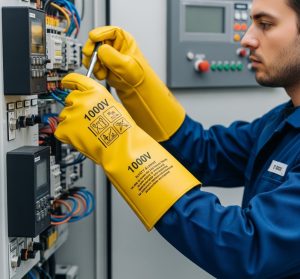
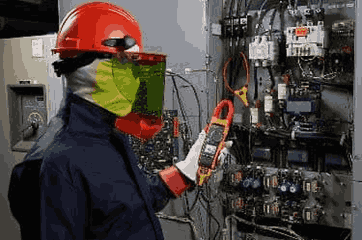
In industrial environments, working with electricity is considered one of the most hazardous tasks. Electric shock can cause severe injuries or even death in a fraction of a second. Therefore, specialized Personal Protective Equipment (PPE)—such as electrical insulating gloves—is critically important.
These gloves are made from dielectric materials and are designed to prevent electrical current from passing through the human body.
Insulating gloves not only ensure personal safety but are also a key indicator of compliance with safety standards in power generation, maintenance operations, and high-risk installations.
Applications of Electrical Insulating Gloves
These gloves are widely used in industries where electrical shock hazards exist, including:
- Power Plants and High Voltage Substations: Technicians use high-class gloves for inspection and maintenance on HV systems.
- Urban and Rural Power Distribution: For work on medium and low voltage distribution lines.
- Electrical Maintenance Workshops: During the servicing of low-voltage panels, capacitor banks, and other electrical equipment.
- Testing Live Equipment and Circuits: In industrial electrical labs and quality control units.
- Oil, Gas, and Petrochemical Facilities: Where specialized electrical systems require strict safety protocols.
Materials and Construction
Electrical insulating gloves are typically made from natural rubber or special synthetic rubber compounds such as EPDM or NBR, offering excellent dielectric properties. Key features of these materials include:
- High resistance to electrical current
- Adequate flexibility for natural hand movement
- Resistance to punctures, cuts, tears, and wear
- Thermal stability in both high and low temperatures
- Optional resistance to chemicals and UV exposure in some models
Most gloves are anatomically shaped and are used in combination with leather outer gloves or protective covers for durability and mechanical protection.

International Standards and Testing Requirements
1. IEC 60903
The primary international standard governing the design, testing, and classification of electrical insulating gloves. It defines six voltage classes, each with a safe working voltage and test voltage.
All gloves must pass mechanical, thermal, dielectric, and visual inspections.
2. ASTM D120
The U.S.-based standard, similar in scope to IEC 60903, with some variations in test procedures. While both standards use a comparable class system, IEC includes DC voltage classifications, whereas ASTM emphasizes AC applications.
3. EN 60903
The European implementation of IEC 60903, which also includes environmental resistance markings, such as:
- A: Acid resistance
- H: Oil resistance
- Z: Ozone resistance
- R: Combined resistances
Pre-Use Testing Requirements
- Dielectric Test: Ensures gloves can withstand high voltage without breakdown.
- Leakage Current Test: Verifies that leakage is within permissible limits.
- Visual Inspection: Checks for holes, cracks, discoloration, or abnormal softness.
- Inflation Test: Gloves are inflated with air or water to check for leaks.
Maintenance and Safety Guidelines
- Test Date & Expiry: Gloves must have a clear test date and expiration date. Typically, they should be retested every 6 months.
- Storage Conditions: Keep gloves in a dry, dark place at 10–30°C, away from sunlight, oils, and chemicals.
- Use with Protective Over-Gloves: Leather gloves are worn over rubber gloves to protect against mechanical damage.
Leather Over-Gloves and Protective Covers
Rubber gloves are susceptible to physical damage from abrasion, sharp tools, or rough handling. Protective leather gloves help by:
- Preventing punctures and cracks
- Extending the service life of rubber gloves
- Enhancing overall mechanical safety
Inspection, Storage, and Handling
Proper care significantly affects glove safety and longevity.
Pre-Use Inspection:
- Visual Check: Look for cracks, holes, cuts, or excessive softness
- Inflation Test: Inflate and check for air leaks
- Routine Electrical Testing: Conduct every 6 months in certified labs
Storage Guidelines:
- Keep away from direct sunlight and heat sources
- Store in a dry, temperature-controlled environment
- Avoid exposure to chemicals and sharp objects
Conclusion
High voltage insulating gloves are among the most critical personal protective tools in the electrical and electronics industry. Proper selection, adherence to international standards, and regular maintenance ensure worker safety and prevent costly damages or system failures.
Our company, leveraging advanced technical knowledge and strict compliance with global standards, is set to begin production of high-voltage insulating gloves. Our mission is to enhance electrical safety across industries and become a regional leader in this specialized field.