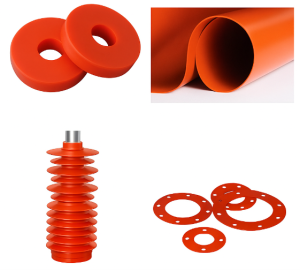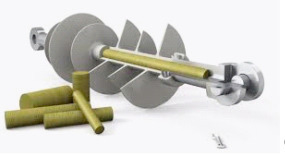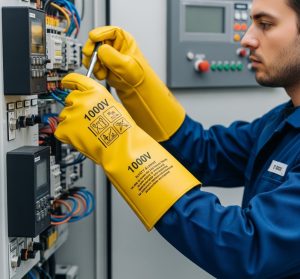
Mylar is a thin, durable plastic film made from polyethylene terephthalate (PET). Due to its unique properties, it is widely used as an electrical insulating material in the electrical and electronics industries.
Why Use Mylar as Electrical Insulation?
- High Dielectric Strength
Mylar can withstand high voltages without conducting electricity, making it an excellent dielectric. - Thermal Resistance
Mylar maintains its shape and integrity at elevated temperatures, making it ideal for use in hot electrical environments. - Chemical and Environmental Stability
It resists moisture, solvents, and many chemicals, ensuring long-term reliability. - Flexibility and Thin Profile
It is easy to cut and shape and takes up minimal space, making it perfect for motors and transformers. - Lightweight and Cost-Effective
Compared to other insulation materials, Mylar is lighter and more affordable.
Common Applications
- Insulating motor and transformer windings
- Dielectric layers in printed circuit boards (PCBs)
- Capacitors (as dielectric films)
- Cable wrap and insulation
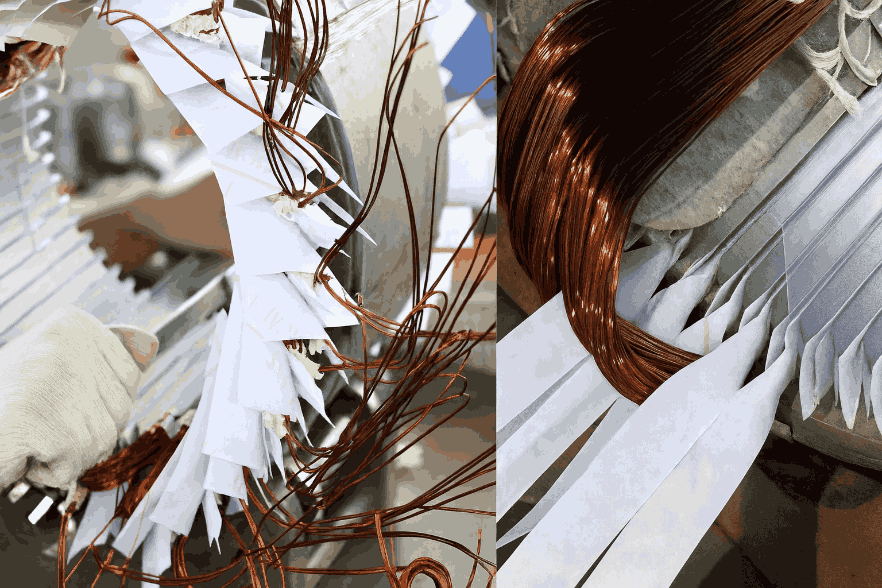
Why Use Dacron Over Mylar?

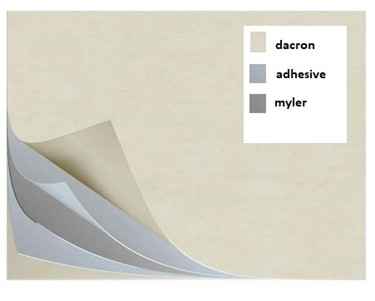
In electrical insulation applications (especially in windings and transformers), Dacron—a high-strength polyester fiber—is often laminated over Mylar for the following reasons:
1. Enhanced Mechanical Strength
Mylar alone is thin and can be vulnerable to tearing or abrasion. Adding a Dacron layer significantly improves the material’s resistance to mechanical stress.
2. Improved Flexibility and Bend Resistance
Mylar may crack during winding or flexing. Dacron adds flexibility and prevents microcracking.
3. Increased Thermal Stability
Like Mylar, Dacron is thermally stable, and the combination allows the composite insulation to perform better at elevated temperatures.
4. Better Adhesion
Dacron has a rougher texture and adheres better to resins or adhesives than the smooth surface of Mylar. It acts as an excellent bonding layer.
5. Structural and Dielectric Support
This combination maintains the dielectric properties of Mylar while adding mechanical robustness through Dacron.
✅ Result: The combination—often known as DMD (Dacron-Mylar-Dacron)—creates a flexible, heat-resistant, and durable insulating material widely used in motors, generators, transformers, and capacitors.
Why Use Nomex Over Mylar?
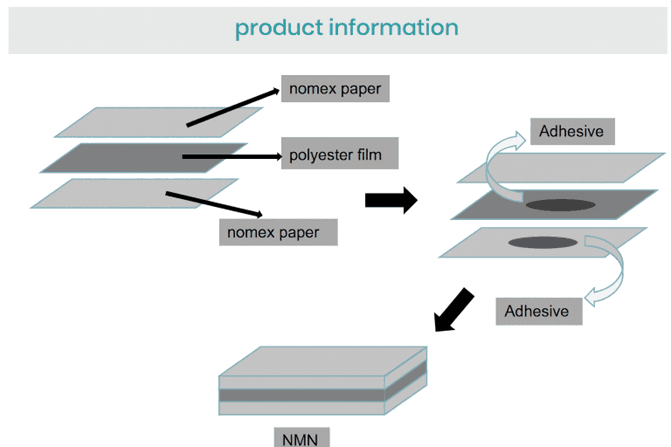
The use of Nomex (an aramid-based flame-resistant material) over Mylar in high-temperature electrical insulation is highly effective and typically results in a composite known as NM or NMN (Nomex-Mylar-Nomex).
1. Superior Thermal Resistance
Mylar is rated for around 130°C (Class B), while Nomex can withstand temperatures up to 220°C (Class H). Nomex-Milar composites provide high thermal endurance.
2. Enhanced Mechanical Strength
Nomex is tougher than Mylar against tearing, abrasion, and vibration—ideal for demanding environments.
3. Excellent Electrical and Corona Resistance
Nomex performs better than Mylar in withstanding partial discharges (PD) and corona effects, protecting the internal Mylar layer and extending insulation life.
4. Improved Resin Absorption and Bonding
Nomex absorbs resins well, enhancing bonding in resin-impregnated windings, which is essential in dry-type transformers and high-voltage motors.
✅ Result: NMN insulation is a high-performance, multilayer insulator with strong mechanical integrity, excellent dielectric properties, and high-temperature stability—widely used in Class H motors, dry-type transformers, and industrial generators.
Comparison Table: Nomex vs. Dacron over Mylar
| Property | Nomex over Mylar (NMN) | Dacron over Mylar (DMD) |
| Outer Layer Material | Nomex (aramid fiber) | Dacron (polyester fiber) |
| Thermal Class | Class H (up to 220°C) | Class B (up to 130°C) |
| Flame and Heat Resistance | Very High | Moderate |
| Dielectric Strength | High (slightly lower than pure Mylar) | High |
| Mechanical Strength | Good (softer than Dacron) | Very Good |
| Corona Resistance | High | Moderate |
| Cost | Higher | Lower |
| Resin Absorption Capability | High | Lower |
| Flexibility | Moderate | High |
| Typical Applications | High-voltage motors, Class H transformers | General transformers, small Class B motors |
Summary
- ✅ NMN (Nomex-Mylar-Nomex): Ideal when high thermal resistance, electrical reliability, and partial discharge protection are essential.
- ✅ DMD (Dacron-Mylar-Dacron): More cost-effective, with excellent mechanical strength and flexibility—suitable for general-purpose applications.
Contact Us
Address: Andisheh 2 Building, Unit 310, Isfahan Science and Technology Town, Isfahan, Iran
Phone: +98 913 551 4126
Email: raibodrubber@gmail.com