Meeting the Diverse and Growing Industrial Needs with Unique Silicone Rubber Properties
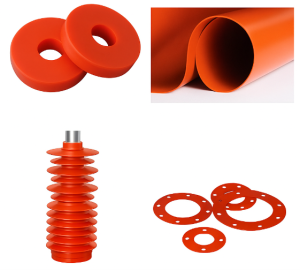
The main components of silicone rubber compounds are raw silicone rubber gums and high-purity silica. Silicone rubber compounds exhibit both mineral and organic material characteristics and offer several advantages not found in other organic rubbers. Silicone rubbers provide excellent electrical properties, chemical stability, flame resistance, and outstanding resistance to extreme heat and cold. Therefore, they are widely used across various industries to improve product quality and performance, including electrical and electronic equipment, office automation devices, automobiles, food products, household goods, and recreational products.
Contents
- General Properties of Silicone
- Heat and Cold Resistance
- Weathering Resistance
- Moisture and Steam Resistance
- Oil, Solvent, and Chemical Resistance
- Electrical Insulation
- Thermal Conductivity
- Flame Retardancy
- Electrical Conductivity
- Compression Set
- Fatigue Resistance
- Tear and Tensile Strength
- Gas Permeability
- Transparency and Colorability
- Radiation Resistance
High Bond Energy
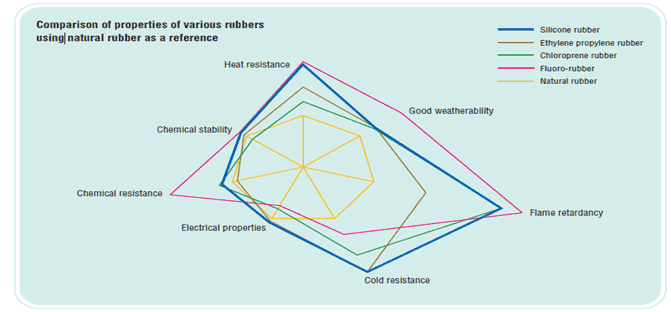
The siloxane bonds (-Si–O–Si-) that form the backbone of silicone (polydimethylsiloxane) are very stable, with bond energy around 433 kJ/mol—higher than the carbon-carbon (C–C) bonds at 355 kJ/mol. Compared to common organic polymers, silicone rubber shows higher thermal resistance, better chemical stability, and superior electrical insulation.
Low Intermolecular Forces and High Helical Flexibility
Silicone molecules have a helical structure with low intermolecular forces, resulting in high tensile strength, excellent compressibility, and outstanding resistance to cold temperatures. Additionally, methyl groups attached externally to the helical backbone rotate freely, giving silicones unique surface properties such as water repellency and good release characteristics.
Heat and Cold Resistance
Silicone rubber outperforms organic rubbers under both high and low temperatures. It can be used continuously at 150°C without property changes and withstands 200°C for over 10,000 hours. Some products tolerate short-term exposure to 350°C, making silicones ideal for high-temperature rubber components.
Silicones also exhibit exceptional low-temperature flexibility. While common organic rubbers become brittle around -20 to -30°C, silicone rubber remains elastic down to -60 to -70°C. Certain silicone products can withstand temperatures as low as -100°C or below.
Typically, silicone rubber hardens and reduces elongation when heated in air but softens under sealed conditions, leading to shorter service life at high temperatures in sealed environments compared to air exposure.
Exceptional Weather Resistance
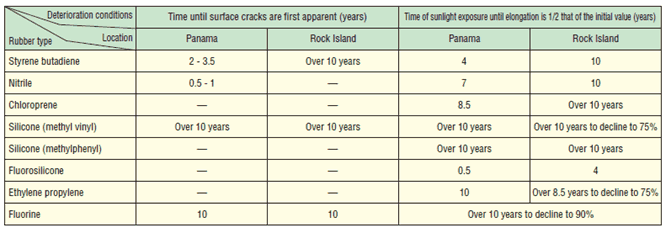
Silicone rubber resists ozone damage caused by corona discharges, which rapidly degrade most organic rubbers. It withstands prolonged exposure to wind, rain, and UV radiation with virtually no change in physical properties.
Moisture and Steam Resistance
Silicone rubber can be submerged long-term in water (cold, warm, or boiling) with only about 1% water absorption and minimal impact on mechanical or electrical properties. At normal pressure, steam does not significantly degrade silicone rubber. However, under high-pressure steam and temperatures above 150°C, siloxane polymer degradation can occur, reducing rubber properties. This can be mitigated by adjusting formulations, selecting appropriate curing agents, or applying post-curing. Several products with enhanced steam and hot water resistance are available.
Excellent Oil and Chemical Resistance
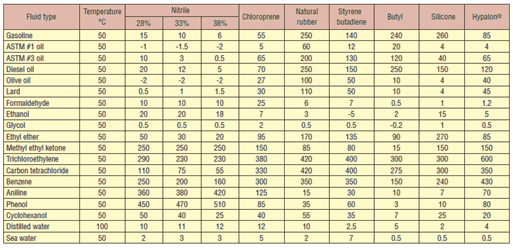
Silicone rubber demonstrates outstanding high-temperature oil resistance. Among organic rubbers, nitrile and chloroprene rubbers resist oil only below 100°C, whereas silicone rubber excels at higher temperatures.
It resists polar organic compounds (anilines, alcohols) and dilute acids or bases, swelling only about 10–15%. Silicone swells in non-polar solvents like benzene, toluene, and gasoline but does not dissolve or degrade; it returns to its original state after solvent removal.
Silicone rubber is affected by strong acids and bases, so it should not be used in environments with such chemicals. Solvent effects typically manifest as swelling, softening, and strength reduction, varying by solvent type.
Fluorosilicone rubber shows especially high solvent resistance, though all silicones outperform most organic rubbers in this regard.
Electrical Insulation
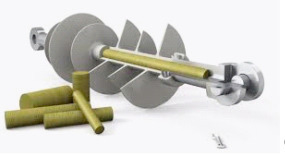
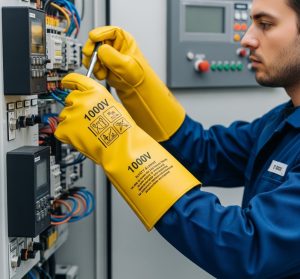
Silicone rubber has a very high volume resistivity (from 1 to 100 TΩ·m) and maintains stable insulation properties across a wide temperature range and frequency spectrum. Even when submerged in water, it shows almost no loss in performance, making it ideal for high-voltage insulation. It resists corona discharge and electric arc at high voltages and is widely used in such applications.
Thermal Conductivity
Silicone rubber’s thermal conductivity is about 0.2 W/m·K, higher than typical organic rubbers. Some silicone rubbers contain high levels of special mineral fillers to improve thermal conductivity up to about 1.3 W/m·K, used in thermal interface materials and heating rollers.
Flame Retardancy
Silicone rubber is not easily ignited when exposed to flame but will continue burning once ignited. Adding small amounts of flame retardants can impart self-extinguishing properties. Some silicone rubbers are UL94 V-0 certified, indicating high flame resistance with minimal smoke and no harmful halogen gases. These rubbers are used in consumer electronics, commercial equipment, airplanes, subways, and building interiors, enhancing safety in enclosed environments.
Electrical Conductivity
Conductive silicone rubbers contain electrically conductive fillers such as carbon black, with resistances ranging from 0.01Ω to 10Ω. They retain properties similar to general silicone rubber and are used in keypad contacts, heater components, anti-static materials, and high-voltage cable protection.
Compression Set
For rubber materials used as gaskets under heat and pressure, recovery from compression deformation is critical. Silicone rubber maintains compression set over a wide temperature range from -60°C to over 250°C. While organic rubbers show significant compression set increase with temperature, silicones require post-curing and proper curing agent selection to minimize this effect, especially in molded parts.
Note: Creep is the deformation under constant load that increases with temperature. Silicone rubber exhibits lower creep than organic rubbers and remains more stable even compared to heat-resistant fluoroelastomers.
Fatigue Resistance
Generally, silicone rubber’s dynamic fatigue strength is not higher than organic rubbers. However, specially formulated flexible silicone rubbers with fatigue resistance 8 to 20 times greater than standard products are now available. These are used in OA equipment keyboards, transportation, and other demanding applications.
Tear and Tensile Strength
Silicone rubber typically has tear strength around 9.8 kN/m. High-performance grades with tear strengths ranging from 29.4 to 49.0 kN/m can be achieved through polymer modification and careful filler and crosslinker selection. These are ideal for molding large parts, reverse taper forms, and complex shapes requiring high tear strength.
Gas Permeability
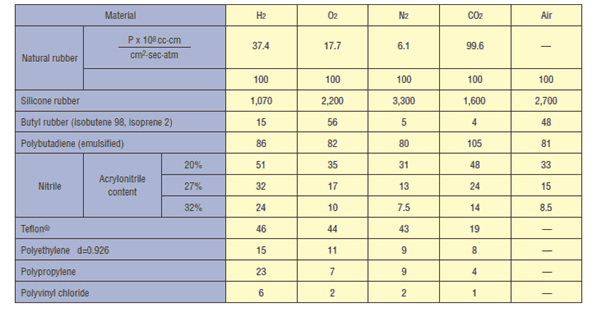
Compared to organic rubbers or plastic films, thin silicone rubber layers show higher gas and vapor permeability. One developing application is as gas and water separation membranes in oxygen enrichment systems.
Transparency and Colorability
Most organic rubbers are black due to carbon content, while silicone rubber can be made highly transparent since fine silica fillers do not impair its natural clarity. High-clarity, high-strength silicone rubbers are produced for food industry tubing and molded parts. Their excellent colorability allows manufacturers to produce colorful molded items easily.
Radiation Resistance
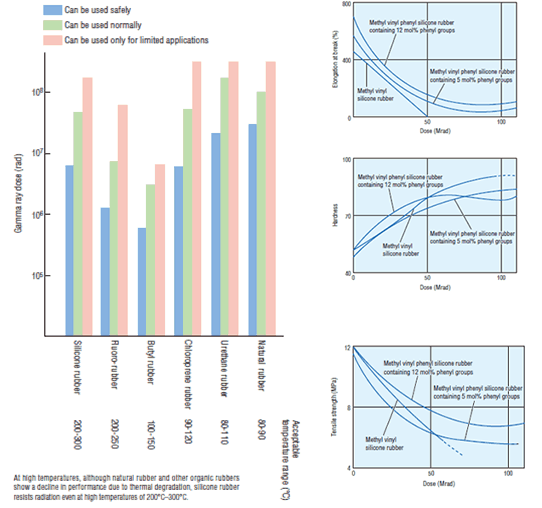
Standard dimethyl silicone rubber does not have better radiation resistance than other organic rubbers. Silicone rubbers with phenyl substitutions (methyl-phenyl silicone) show enhanced radiation resistance and are used in cables and connectors in nuclear power plants. Phenyl-modified silicones retain the excellent heat resistance, electrical insulation, flame retardancy, and chemical resistance of other silicones.
Contact Us
Address: Unit 310, Andisheh 2 Building, Isfahan Science and Technology Town, Isfahan, Iran
Phone: +98 913 551 4126
Email: raibodrubber@gmail.com